Ryutaro Tanno
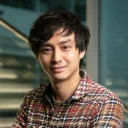
Hi, I’m Ryu. I’ve spent the last 10 years building AI systems for healthcare and biomedical applications. I’m most passionate about creating AI that empowers human experts and transforms their work in ways that are lasting, scalable and joyful.
At Google DeepMind, where I was a Staff Research Scientist until recently, I worked on foundational research and real-world deployment of LLM-based systems for healthcare. Most recently, I led research on AI co-clinician, Google DeepMind’s new initiative to reimagine how care is delivered.
Prior to that, I co-led multimodality for Med-Gemini and was a co-technical lead of AMIE, Google’s research programme on conversational diagnostic AI, helping the team take it from the first text-only diagnostic study to multimodal consultations, specialist care, disease management and a prospective study in primary care. Before that, I led Flamingo-CXR, the first demonstration of human–AI collaboration in radiology report writing.
Previously, I was a Senior Researcher in the Health Intelligence group at Microsoft Research Cambridge with Aditya Nori, where I worked on InnerEye, deployed across the NHS for radiotherapy, and T-Detect, the first T-cell based COVID test. I did my PhD in Computer Vision and Machine Learning at UCL, supervised by Daniel C. Alexander and Antonio Criminisi (Microsoft Research).
Along the way, I’ve been fortunate to work with medical AI start-ups around the world. I was one of the first members of ThinkSono, where I co-developed the prototype of a real-time deep learning system for detecting deep vein thrombosis in ultrasound videos, and a research intern at Butterfly Network, where an algorithm I worked on shipped in their handheld ultrasound device. I’ve also advised SyntheticGestalt and a Terumo spin-out, and currently advise Aillis.
Selected Work
LLMs & Agents for Medicine and Science
-
AMIE
Conversational diagnostic AI, from simulated consultations to a prospective study in primary care.
Diagnosis & management
- Text-only Nature 2025
- Multimodal Nature Medicine 2026
- Disease management Nature 2026
Specialist care
- Cardiology Nature Medicine 2026
- Oncology NEJM AI 2025
Safety & deployment
- Safety guardrails + expert oversight arXiv 2025
- Prospective validation in primary care The Lancet 2026
-
Gemini & Med-Gemini
Gemini models and their specialisation for medicine, from clinical text to medical imaging modalities and genomics.
- Gemini 2.5 Google blog 2025
- Med-Gemini arXiv 2024
-
AI Co-Clinician
A research initiative on triadic care, in which AI works alongside both patients and physicians. One key ingredient is a real-time agent that sees, hears and speaks with patients over live video.
- Medical AI with eyes, ears and a voice arXiv 2026
-
AI Co-Scientist
A multi-agent system that generates, critiques and refines scientific hypotheses.
-
Flamingo-CXR
Expert-level specialised VLM post-trained for radiology report generation. Clinician–AI collaboration led to the best results.
Reliable AI: Robustness, Fairness & Uncertainty
-
Robustness & Fairness
Generative models that make medical classifiers fairer under distribution shift.
-
Learning from Noisy and Biased Labels
Separating annotators’ errors from the truth, and choosing which labels to clean.
- Annotator confusion CVPR 2019
- Human error in segmentation NeurIPS 2020
- Active label cleaning Nature Communications 2022
-
Active Learning
Use a small proxy model to inform which data and in what order a large model should learn from to improve sample-efficiency and performance.
- Bad students make great teachers ECCV 2024
-
Model Repair
Finding why a model fails in deployment and repairing it.
- Failure analysis MICCAI 2021
- Continual un-learning for model repair NeurIPS 2022
-
Uncertainty Quantification
Deep learning that estimates different types of uncertainty, to gauge the risk of failure and explain its causes.
- Bayesian image quality transfer MICCAI 2017 (Young Scientist Award)
- Safer neuroimage enhancement NeuroImage 2020
- Uncertainty in medical image synthesis Book chapter 2022
Architectures & Representation Learning
-
Adaptive Neural Trees
Marrying neural networks and decision trees to get the best of both worlds.
-
Stochastic Filter Groups
Multi-task networks that learn which convolution kernels to share across tasks and which to specialise.
-
Learning Where to Look
Learning where to sample ultra-high-resolution images before segmenting them, keeping detail where it matters.
- Foveation MICCAI 2020
- Learning to downsample ICLR 2022
-
Learning Better Vision–Language Alignment
Learning object-level concepts from images and text, and aligning vision–language models with diffusion models.
- Multi-concept prompt learning ICML 2024
- Diffusion instruction tuning ICML 2025